
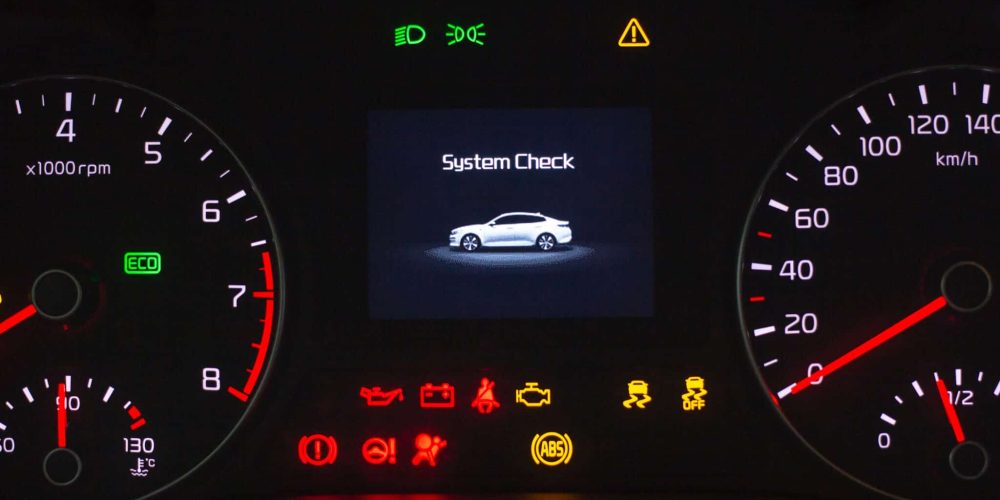
Seeing the VSA light come on can be stressful, especially when you are not sure what changed. Your vehicle might still feel normal, or you might notice other warning lights appear at the same time. Either way, it is natural to wonder what the light means, whether the vehicle is safe to drive, and how quickly you need to have it checked. When the light comes on, it could mean the system is actively working, the system has been turned off, or there is a problem that needs attention. The tricky part is that several different issues can trigger the same warning, including wheel speed sensor problems, ABS-related faults, steering angle issues, alignment changes, suspension work, or even certain repairs that affect modern safety systems. In this guide, we will walk through what the VSA light means, why it may be on, what you should check first, and when it is time to get professional help.
What Does the VSA Light Mean?
VSA stands for Vehicle Stability Assist, and it is the name Honda and Acura use for their version of electronic stability control. If you drive a vehicle from a different manufacturer, you might know this same kind of system by a different name. Some brands call it ESC, some call it ESP, and others have their own branded names. The technology behind all of them is similar.
The VSA light on your dashboard is the warning light tied to that system. It can show up in a few different ways, and what it means depends on how it behaves. A quick flash usually means the system is actively working to help keep your vehicle stable. A solid light that stays on often means the system has been turned off manually or that there is a problem the system has detected. Some vehicles will also show a “Check VSA System” message, which is usually a more direct way of telling you something needs attention. Honda’s own owner documentation notes that when the VSA indicator stays on while driving, it may indicate a problem with the system and the vehicle should be inspected.
How Does Vehicle Stability Assist Work?
Vehicle Stability Assist is designed to help you maintain control of your vehicle in situations where traction is limited or where the vehicle starts to slide.
To do this, VSA relies on a network of sensors that are constantly feeding information to a control module. Some of the most important inputs include:
- Wheel speed sensors that measure how fast each individual wheel is turning
- A steering angle sensor that tracks the direction you are steering
- A yaw rate sensor that measures how much the vehicle is rotating around its vertical axis
- A lateral acceleration sensor that measures sideways forces
When the system detects a difference between where you are steering and where the vehicle is actually going, it takes action. It can apply braking force to individual wheels, reduce engine power, or both. These adjustments happen in fractions of a second, often before the driver even realizes anything is happening.
VSA works alongside other systems like ABS and traction control. In fact, it shares many of the same sensors with those systems, which is part of why a problem with one can sometimes show up as a warning for another.
What Causes the VSA Light to Come On?
This is where things get interesting. There is no single answer to what causes the VSA light to come on, because the system pulls data from so many different sources. Let us walk through the most common reasons drivers see the warning light light up.
The System Has Been Turned Off
Most vehicles with VSA have a button that allows the driver to turn the system off. This is sometimes useful when getting unstuck from snow or mud, where wheel spin can actually be helpful. If the button has been pressed, the VSA light will stay on as a reminder. Pressing the button again usually turns the system back on and the light goes off.
Wheel Speed Sensor Issues
The wheel speed sensors are one of the most common culprits behind a VSA warning. These sensors live near each wheel and can become dirty, damaged, or fail outright. When the system gets bad data from a wheel speed sensor or stops getting data altogether, it cannot do its job, so it turns the system off and lights up the warning.
Steering Angle Sensor Problems
The steering angle sensor tells the system which way you are trying to go. If it is out of calibration or faulty, the system cannot accurately compare your steering input to the vehicle’s actual movement. This can trigger the VSA light and may require a calibration of the sensor after an alignment, suspension work, or steering component replacement.
Recent Alignment, Suspension, or Tire Work
This is one that surprises a lot of drivers. After a wheel alignment, suspension repair, or even a tire replacement with significantly different tire sizes, the VSA light can come on. That is because these systems depend on consistent inputs across all four wheels. If something changes the geometry of the vehicle or the relationship between wheels, the system may need to be reset or calibrated.
Collision Damage or ADAS-Related Repairs
If your vehicle has been in a collision, even a minor one, sensors related to stability and ADAS systems can be knocked out of alignment or damaged. Repairs involving the front of the vehicle, windshield replacement, or any work that touches a calibrated sensor can sometimes leave the VSA light on until proper diagnostics or calibration is performed.
Is It Safe to Drive With the VSA Light On?
If the VSA light comes on and your vehicle is driving normally, with no other warning lights, no unusual sounds, and no changes in braking or steering, you can usually drive cautiously to a safe place to have it checked. Avoid hard acceleration, sharp turns, and aggressive maneuvers. Treat the vehicle as if you do not have stability assist, because in that moment, you may not.
If the VSA light comes on along with the ABS light, the brake warning light, or the check engine light, the situation is more serious. Multiple warning lights often point to a shared issue that may affect braking or other critical systems. In that case, it is best to get the vehicle inspected as soon as possible.
How Do You Diagnose a VSA Light?
Diagnosing a VSA light is not something most drivers can do in their driveway, and that is okay. The system relies on sensor data and control module communication that can only be read with the right equipment. Here is what the process usually looks like at a qualified shop.
- Scan for diagnostic trouble codes. A technician connects a scan tool to the vehicle’s OBD-II port and reads the codes stored in the VSA, ABS, and related modules. These codes point to which sensor or component is reporting an issue.
- Inspect the suspected components. Once the codes give a starting point, the technician physically inspects the wheel speed sensors, wiring, connectors, steering angle sensor, and related parts.
- Test sensor performance. Some issues only show up under specific conditions, so the technician may need to road test the vehicle while monitoring live sensor data.
- Repair or replace as needed. Depending on what is found, the fix could be as simple as cleaning a sensor or as involved as replacing a control module.
- Clear codes and calibrate. After the repair, codes are cleared and any required calibrations are performed to restore the system to proper function.
The reason this process matters is that guessing rarely works. Two vehicles with the exact same VSA warning can have completely different underlying causes. The codes and live data are what tell the technician what is actually happening.
Does a VSA Light Mean You Need Calibration?
Sometimes yes, sometimes no. It depends on what caused the light to come on and what repairs have been done to the vehicle.
For stability systems, the steering angle sensor is one of the most common components that needs calibration after certain work is performed. In many newer vehicles, stability and ADAS systems are tightly integrated. A repair that affects one can affect the other. That is part of why having the work done by a shop that understands both modern safety systems and OEM calibration procedures is so important.
If a shop simply clears the VSA code without performing the required calibration, the light may come back, or worse, the system may stay active but provide inaccurate input. That is the situation you want to avoid. Proper calibration restores the system to the way the manufacturer intended it to work.
Find a Professional ADAS Calibration Center Near You
The VSA light can come on for several reasons, and not all of them mean the same thing. Sometimes the system is simply responding to slippery road conditions. Other times, the light may stay on because the system has been turned off or because there is an issue with a sensor, ABS component, steering angle input, alignment, suspension, or related safety system. The most important thing is to pay attention to how the light behaves and whether other warning lights appear with it. If the VSA light stays on, keeps coming back, or shows up after recent repairs, it is worth having the vehicle inspected instead of guessing at the cause. Modern stability and driver assistance systems depend on accurate sensor information, and repairs involving alignment, suspension, collision damage, windshield replacement, or ADAS sensors can sometimes require professional diagnostics or calibration. Car ADAS makes it easier to find the right help. Use the Car ADAS Calibration Center Locator to find a professional calibration center near you for repairs, diagnostics, and calibration support.


