
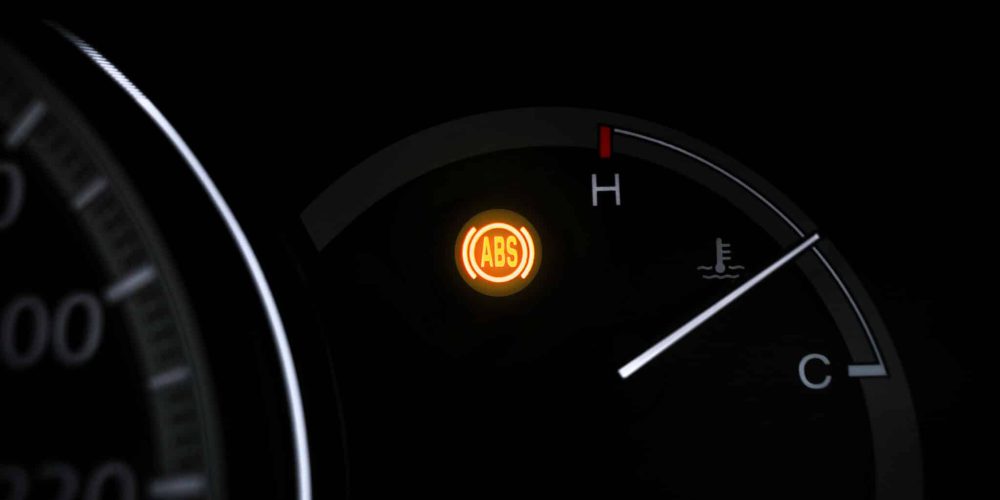
If the vehicle’s anti-lock braking system (ABS) warning light pops on out of nowhere or the brakes suddenly feel different, you are in the right place. Many drivers are surprised to learn that ABS issues are often tied to sensor problems, electrical faults, or even minor matters like debris near the wheels. In some cases, ABS failures can also affect traction control or stability control, making the problem bigger than it appears. In this blog, we will walk through the most common reasons the ABS may not be working, simple checks to perform at home, and when it is time to schedule a professional diagnostic. You will also learn how ABS fits into a vehicle’s larger safety and advanced driver-assistance systems (ADAS).
What Is ABS and How Does It Support Vehicle Safety?
Anti-lock braking systems prevent wheel lockup during hard braking to maintain steering control. Each wheel has a speed sensor that feeds data to an ABS control unit and a hydraulic modulator. When a wheel decelerates too quickly and is about to lock, the module pulses brake pressure at that wheel several times per second. The result is stable, steerable braking on wet, icy, or gravel surfaces.
A quick note on expectations: ABS is designed to keep a driver in control. It does not always shorten stopping distance on every surface, especially on loose gravel or fresh snow, but it reduces skidding and helps steer around hazards.
Most Common Reasons ABS Stops Working
Now that you know the basics, here are the issues we see most often when an ABS not working complaint comes up.
- Wheel speed sensor faults
These are the most common culprits. Sensors live near the wheel hub where they endure water, salt, heat, vibration, and road debris. Contamination on the magnetic tip, a cracked or rusted tone ring, or a damaged harness can produce signals that disable ABS and sometimes traction control. - Damaged wiring or connectors
The harness from each sensor flexes with steering and suspension travel. It can chafe, break internally, or corrode at the connector. Pinched or stretched wiring during recent brake, hub, or axle work is a common cause of an ABS light after service. - Tone ring or encoder issues
Depending on the vehicle, the tone wheel may be a toothed reluctor on the axle, a magnetic encoder built into the wheel bearing, or a ring on the back of the rotor. Cracks, missing teeth, sensor air gaps that are too large, or installing a hub with the wrong encoder polarity all cause false wheel speed data. - Low or contaminated brake fluid
While the ABS has its own electronic controller, it still relies on the brake hydraulic system. Low fluid from a leak can impair modulator function and set codes. - Post-repair installation errors
After hub, bearing, or brake work, the ABS light may come on if the axle nut was not torqued to spec, a hub without an encoder was installed by mistake, the encoder ring was flipped, or a sensor was nicked during assembly.
Between these five buckets, you’ll find the root of most ABS warnings.
When to Seek Professional Diagnostics or ADAS Calibration
If the checks point to electrical faults, internal hydraulic issues, or communication errors between modules, it is time to book a professional diagnostic. Modern vehicles use shared sensor data for ABS, traction control, stability control, and ADAS. That overlap means a single sensor fault can ripple through multiple systems.
Calibration enters the picture when a repaired or replaced sensor, module, or wheel hub requires the vehicle’s control units to relearn baselines or confirm alignment. Shops with ADAS-capable scan tools can perform guided calibrations and verify that ABS and electronic stability control (ESC) operate as a coherent safety net. A module or pump replacement may require coding for a specific vehicle, which is best handled by trained technicians with the right software access.
A sensor or system left uncalibrated can lead to inaccurate readings or malfunctioning features. For example, an improperly calibrated wheel speed sensor might cause the ABS to engage unnecessarily or fail to activate during a critical moment. Similarly, a misaligned radar or camera system can result in incorrect distance measurements, affecting adaptive cruise control or collision avoidance systems.
Proper calibration ensures that all components work in harmony, providing the driver with reliable and precise assistance on the road.
How to Prevent ABS Problems in the Future
Prevention is about keeping sensors clean, wiring protected, and hydraulics healthy.
- Service brake fluid on schedule. Brake fluid absorbs moisture over time. Replacing it at the interval stated in the owner’s manual helps protect the ABS modulator from internal corrosion.
- Rinse road salt off wheel ends. If the vehicle is driven where salt or mag chloride is used, occasional rinsing helps prevent rust buildup around tone rings and shields that can push a sensor out of alignment.
- Protect wiring during service. When doing brakes or hubs, route the sensor lead exactly like the factory did and use all clips. A wire that rubs on a strut or axle will fail sooner.
- Use quality parts. Cheap hubs may omit encoder rings or use weak magnets that confuse the module. Choose reputable brands that specify encoder type and polarity for the vehicle.
- Know the feel of a healthy ABS. During a safe test, firm pedal plus rapid pulsing equals normal operation. If you feel harsh chatter or grinding, or if the system intervenes during everyday gentle stops, have it checked.
A light touch with a few of these habits will avoid a bigger repair down the road.
Find a Calibration Center Near You
If you’re dealing with ABS issues or suspect a sensor or alignment problem, the next step is to find a calibration center that can properly diagnose and correct it. Accurate calibration restores system reliability and keeps ABS, traction control, and stability control functioning as they should. Use our calibration center locator to find a trusted shop near you and have your vehicle checked by trained technicians who specialize in ADAS.


