
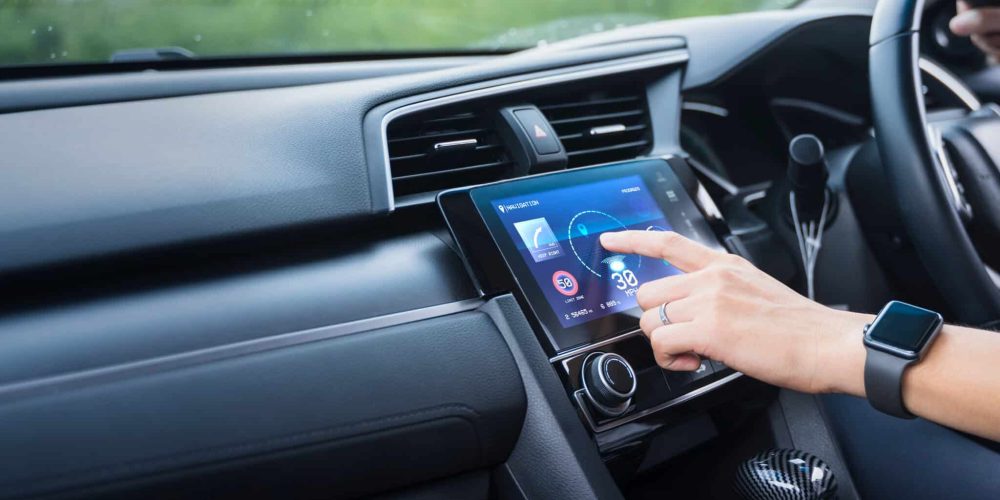
Electronic stability control is a system that senses when your vehicle is starting to slide in a direction you did not intend, and it exists to catch that slide before it becomes a spin. But what is actually happening when that light flashes on the dash? Is it the same thing as traction control? Can it save you in any situation, or are there limits? In this guide, we are going to walk through what electronic stability control is, how it works, what it can and cannot do, and why the sensors behind it need to be right for the system to function at all. By the end, you will understand one of the most important safety features on your vehicle.
What Is Electronic Stability Control?
Electronic stability control, usually shortened to ESC, is an active safety system that keeps a vehicle pointed where the driver is steering it. It was designed to solve a specific and deadly problem: single-vehicle loss-of-control crashes. This commonly occurs when a car breaks loose in a corner or an emergency maneuver and spins or slides off the road. ESC attacks that problem by braking individual wheels to pull the vehicle back onto its intended path, which is something no driver can do from the pedal.
The technology proved effective enough that federal regulators made it mandatory. Under FMVSS No. 126, every passenger vehicle under 10,000 pounds sold in the United States has been required to have ESC since the 2012 model year, so if your vehicle is newer than that, you have it. You may just know it by a different name. Toyota calls it Vehicle Stability Control, Honda calls it Vehicle Stability Assist, BMW calls it Dynamic Stability Control, and much of Europe calls it ESP. Different badges, same system, and all of it sits within the broader family of ADAS technology that modern vehicles depend on.
How Does Electronic Stability Control Work?
ESC works by constantly comparing where you are steering with where the vehicle is actually going. To do that, it monitors a small network of sensors many times per second.
The steering angle sensor reports the driver’s intent and the exact position of the steering wheel. Wheel speed sensors at each corner report how fast every wheel is turning. A yaw rate sensor measures how quickly the vehicle is rotating around its vertical axis, and a lateral accelerometer measures how hard it is being pushed sideways. When the yaw and acceleration data stop matching what the steering angle says should be happening, the vehicle is sliding, and the ESC module intervenes.
The intervention is targeted braking. If the rear of the vehicle steps out and the car rotates more than the steering input calls for (oversteer), ESC brakes the outside front wheel to counter the rotation. If the front tires wash out and the car plows straight instead of turning (understeer), it brakes the inside rear wheel to help pull the nose back into the corner. Most systems also cut engine torque at the same time. When done well, the correction happens in a fraction of a second, often before the driver fully registers that the vehicle began to slip. That is the quiet brilliance of the system, and also why its accuracy depends entirely on sensors that are reading the vehicle correctly.
Electronic Stability Control vs Traction Control
Drivers mix these up constantly, partly because the two systems share hardware and often share a dash light. The difference is the direction of the problem each one solves.
Traction control manages wheel spin under acceleration. When you press the throttle and a drive wheel spins faster than the road speed justifies, on ice, gravel, or a hard launch, traction control cuts power or brakes that wheel until it grips again. It is working in the direction the vehicle is traveling.
ESC manages sideways motion. It does not care whether you are accelerating; it cares whether the vehicle’s actual path matches the steered path, and it intervenes when the car begins to rotate or slide laterally. In practice, traction control is a subset of the stability control system. Both live in the same control module, both use the ABS hardware to apply individual brakes, and both read the same wheel speed sensors. Every ESC-equipped vehicle has traction control, but traction control alone cannot catch a slide.
What Are the Limits of Electronic Stability Control?
ESC is one of the most effective safety technologies ever put on a passenger vehicle. Federal crash research found ESC-equipped vehicles are roughly half as likely to be in a single-vehicle rollover crash as comparable vehicles without it. But the system operates inside the laws of physics, not above them.
ESC manages the grip your tires have. It cannot create grip that is not there. Enter a corner fast enough and no braking strategy will keep the vehicle on the road, because the tires’ traction budget is already spent. On glare ice or standing water, where the tires have little or no contact with pavement, the control systems have almost nothing to work with. ESC also does not steer; it can only nudge the chassis back toward the direction the wheel is pointed, which means a panicked or frozen driver input still leads the dance. Worn tires, overloaded roof racks, and lifted or lowered suspensions all shrink the margin the system has to work within. ESC widens your margin for error. It does not remove the error.
When Does Electronic Stability Control Need Calibration?
Here is the part that matters for shops and gets missed by drivers: ESC is only as accurate as its sensors, and routine service can quietly put those sensors out of spec.
The steering angle sensor is the usual suspect. Its entire job is knowing where straight ahead is, and a wheel alignment changes exactly that. After toe adjustments or a thrust angle correction, the steering wheel’s centered position no longer matches the sensor’s stored zero point. Many OEMs require the sensor to be reset or calibrated with a scan tool before the vehicle leaves. The same applies after replacing tie rods, control arms, a steering rack, or the clock spring, and after suspension work that changes ride height, which also affects the yaw and acceleration sensors’ reference. Collision repair raises the stakes further, since an impact can affect multiple sensors at once.
The reach of the problem is bigger than the ESC light. The steering angle and wheel speed data that stability control depends on also feed lane keep assist, automatic emergency braking, and adaptive cruise, so a sensor that is lying to one system is lying to all of them. And clearing the code is not the same as fixing the data. A scan tool can turn the light off while the sensor keeps reporting a crooked version of reality, which is why ADAS calibration to the vehicle maker’s published procedure (documented in each brand’s OEM position statements) is the standard the industry is moving toward.
Start or Grow Your Own ADAS Calibration Center
Electronic stability control works best when you never notice it working. Understanding what the system does and what it depends on turns a mystery light on the dash into something you can actually reason about. The part that gets overlooked is that ESC is only as accurate as the sensors feeding it, and routine work like an alignment or suspension repair can leave those sensors reading the vehicle incorrectly. At Car ADAS Solutions, we help shop owners build calibration centers with the equipment, OEM procedures, training, and support needed to bring these systems back to spec the right way. As more vehicles depend on sensor accuracy for basic safety, calibration stops being an add-on service and starts being the work itself. Learn how to start your own ADAS calibration center with Car ADAS today.


