
If you have seen a forward collision warning light turn on, you are not alone. Modern vehicles are packed with Advanced Driver Assistance Systems designed to help prevent accidents and protect you and your passengers. The Forward Collision Warning system, often referred to as FCW, plays a major role in detecting potential frontal collisions and alerting you before impact. But what triggers that light? Is it a simple sensor blockage, a system malfunction, or something that requires professional attention? And how does this technology actually work behind the scenes? In this guide, we will break down everything you need to know about the forward collision warning light. You will learn what the symbol means, how the system uses cameras and radar to calculate collision risk, what causes the light to turn on, and why proper calibration is essential after repairs or windshield replacement.
What Is a Forward Collision Warning System?
Before we talk about the warning light itself, it helps to understand how the system works.
A Forward Collision Warning system is an Advanced Driver Assistance System that monitors the road ahead and alerts you if it detects a potential frontal collision. It does not replace you as the driver. Instead, it adds an extra layer of awareness.
Most FCW systems use a combination of:
- A forward-facing camera mounted near the windshield
- A radar sensor mounted behind the front grille or bumper
- Onboard software that calculates closing speed and distance
The radar measures how far away an object is and how fast you are approaching it. The camera identifies vehicles, pedestrians, and lane markings. The vehicle’s computer then calculates time-to-collision using algorithms that analyze speed, trajectory, and object detection confidence. If the system determines that a crash is likely and you have not applied the brakes, it triggers the forward collision warning light, often accompanied by an audible alert.
In many vehicles, FCW also works alongside Automatic Emergency Braking. If you fail to react, the vehicle may apply the brakes automatically. This is why the system is so important. It is designed to reduce the severity of crashes or help prevent them entirely.
Why Does the Forward Collision Warning Light Turn On?
Seeing a collision warning light can be unsettling. There are several possible reasons. Some are minor. Others require professional evaluation.
Environmental Factors
Sometimes the system is temporarily disabled due to environmental conditions.
Common causes include:
- Heavy rain or snow obstructing the camera
- Ice or dirt covering the radar sensor
- Direct sunlight glare affecting the windshield camera
- Mud or debris on the front bumper
If the camera cannot clearly “see” the road or the radar signal is blocked, the system may turn the forward collision warning light on to let you know it is not operating at full capability. Cleaning the windshield area near the rearview mirror and the front grille can sometimes resolve the issue. However, if the light remains on, further inspection and calibration are necessary.
Minor Impacts or Front End Repairs
Even a small bump in a parking lot can affect sensor alignment. Radar sensors are mounted with extremely tight tolerances. A slight shift in mounting angle can change the detection zone by several feet at highway speeds.
For example, if a radar sensor is misaligned by just one degree, its detection path at 200 feet can shift significantly. That means it may not detect a vehicle directly ahead, or it could trigger false warnings.
These are some of the most common reasons a forward collision warning light on the dashboard appears after:
- Fender benders
- Bumper replacements
- Front grille repairs
- Sensor bracket adjustments
Windshield Replacement
Many drivers are surprised to learn that windshield replacement often requires calibration. The forward-facing camera is typically mounted directly to the windshield. If the glass is replaced, even slight changes in angle or positioning can impact how the camera interprets distance and lane position.
Without proper calibration , the system may:
- Misjudge following distance
- Fail to detect vehicles accurately
- Provide delayed warnings
In many cases, the forward collision warning light will light up until proper calibration is completed.
Internal Diagnostics or Sensor Failure
Modern vehicles constantly perform self-checks.
If the system detects:
- Radar communication errors
- Camera faults
- Software malfunctions
- Voltage irregularities
It may trigger the collision warning light as a precaution. In these cases, diagnostic scanning and calibration verification are necessary to restore functionality.
What Does the Forward Collision Warning Light Look Like?
If you are unsure whether the light you are seeing is related to FCW, here is what to look for.
The forward collision warning symbol typically includes:
- Two vehicles facing the same direction
- An exclamation mark between them
- A starburst or impact graphic in front of one vehicle
In some vehicles, it may appear as a front collision warning light with the word “BRAKE” flashing in red. Keep in mind that the exact design of the forward collision warning symbol varies by manufacturer. Always consult your owner’s manual for confirmation.
Is It Safe to Drive With the Forward Collision Warning Light On?
This is one of the most common concerns drivers have. In most cases, your vehicle will still operate normally. Steering, acceleration, and braking remain functional. However, the driver assistance feature may not function correctly.
That means:
- You may not receive timely collision alerts
- Automatic emergency braking may not engage as intended
- Distance calculations may be inaccurate
While you can technically drive the vehicle, you are operating without a system designed for safety. Think of it like driving without a backup camera. The car still works, but you lose a layer of protection.
Because FCW systems rely on precise sensor alignment and software calibration, ignoring the forward collision warning light can reduce the effectiveness of your vehicle’s safety features.
What Is Forward Collision Warning Calibration and Why Is It Required?
This is where many drivers misunderstand the issue. Calibration is not simply clearing a dashboard code. It is a precise alignment process that ensures the radar and camera are positioned according to manufacturer specifications.
There are two primary types of calibration:
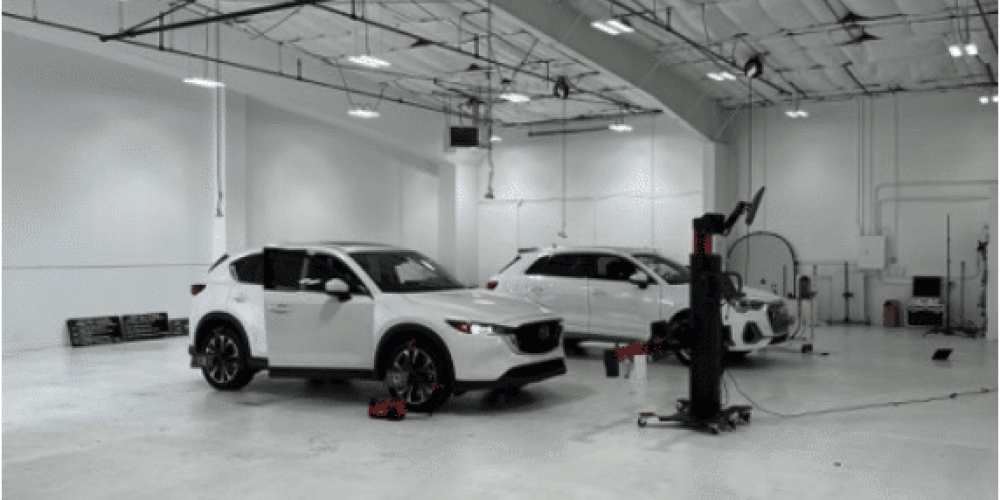
Static Calibration
This process is performed in a controlled environment using:
- Manufacturer-specified targets
- Precise measurements
- Laser alignment tools
- Level floors and proper lighting
The vehicle must be positioned at exact distances from calibration targets. Even minor measurement errors can affect sensor performance.
Dynamic Calibration
In some cases, the vehicle must be driven under specific conditions so the system can calibrate while in motion. This requires:
- Clear lane markings
- Controlled speeds
- Proper environmental conditions
Professional calibration centers follow strict OEM procedures. These procedures are not optional. They are designed to ensure your forward collision warning system performs exactly as intended.
Attempting to skip calibration or relying on non-specialized shops can leave the system improperly aligned. That may result in:
- Delayed warnings
- False alerts
- Failure to detect obstacles
Because FCW systems are tied directly to crash prevention, precision matters. Professional ADAS calibration centers use manufacturer-approved equipment and follow documented procedures. They verify angles, distances, and software parameters to restore full functionality.
Find a Professional ADAS Calibration Center Near You
Ignoring an FCW light can reduce the effectiveness of a system designed to help prevent serious accidents. Even small changes, such as a windshield replacement or minor front-end repair, can affect sensor alignment and detection accuracy. If your forward collision warning light is lit up or your vehicle has recently undergone repairs, the safest next step is to find a professional calibration center near you. Proper calibration ensures that your sensors are aligned to manufacturer specifications so your system responds exactly as intended. Taking a few minutes to verify everything is working properly helps ensure you and your passengers are safe every time you get behind the wheel. Visit our Find an ADAS Calibration Center page today to get an appointment scheduled.


