
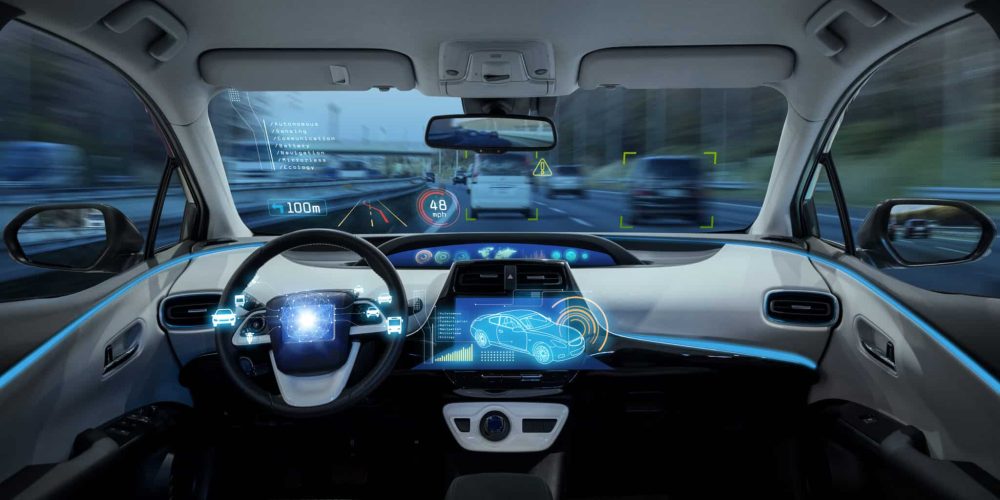
From advanced safety features to fully autonomous vehicles, the automotive industry is undergoing a transformation that promises to revolutionize our roads and the way we commute. At the heart of this transformation lies the concept of autonomous driving, supported by a suite of technologies known as Advanced Driver Assistance Systems (ADAS).
Thanks to technological advancement vehicles can now anticipate potential dangers, react swiftly to emergencies, and provide a seamless and stress-free driving experience. In this article, we’ll discuss all of the different autonomous driving levels and the intricate web of ADAS technologies that make it all possible.
Society of Automotive Engineers (SAE) Levels of Autonomous Driving
The Society of Automotive Engineers (SAE) has established a comprehensive framework to categorize and define the different autonomous driving levels in vehicles. This framework, known as the SAE J3016 standard, classifies autonomous driving into six distinct levels, each representing a different degree of automation. These levels serve as a critical reference point for both the automotive industry and regulatory bodies, helping to clarify the capabilities and limitations of autonomous vehicles as they progress toward full automation. From basic driver assistance systems to fully self-driving vehicles, the SAE levels provide a structured roadmap for understanding the evolution of autonomous technology and its impact on the future of transportation.
ADAS Level 0: No Driving Automation
The first level of autonomous driving established by the SAE involves no vehicle automation at all. The driver’s full engagement is necessary, with features restricted to issuing warnings and offering temporary aid. Blind Spot Monitoring and Lane Departure Warning are two examples of ADAS features that can fall underneath Level 0. While these systems can help alert the driver to potential obstacles, they must be consistently supervised in order to maintain safety on the road.
ADAS Level 1: Driver Assistance
In the early days of autonomous driving, the technology was primarily limited to research labs and experimental vehicles, far from the reach of everyday consumers. Level 1 autonomy marked a significant step forward, introducing driver assistance systems such as adaptive cruise control and lane-keeping assist. These features offered drivers a taste of what was to come, delivering both convenience and assistance. However, their capabilities were limited, and human supervision remained an essential part of the equation.
ADAS Level 2: Partial Automation
Vehicles equipped with Level 2 ADAS (Advanced Driver Assistance Systems) can manage several driving tasks, including acceleration, braking, and steering, but still require the driver’s vigilance and attention. Level 2 ADAS is distinguished by the way its features can work in unison, allowing for lane centering and adaptive cruise control features to operate simultaneously. This cooperative function is the primary difference between Level 1 and Level 2 ADAS systems. While Level 1 automation provides only one automated control function, Level 2 ADAS includes a significant advancement by integrating multiple automated capabilities to enhance driving safety and efficiency.
ADAS Level 3: Conditional Automation
Under Level 3 ADAS, vehicles gain the ability to manage most aspects of driving under certain conditions, allowing drivers to disengage from active control. When comparing Level 2 autonomous vehicles to those classified as Level 3 ADAS – control is the subtle, but key difference. Whilst Levels 0 to 2 encompass a range of driver assistance features, they cannot handle tasks independently. At Level 3, self-driving vehicles exhibit the capability to independently handle specific tasks and scenarios, yet they retain the necessity for a human driver to assume control when prompted or when faced with situations beyond the system’s capabilities.
ADAS Level 4: High Automation
Level 4 ADAS vehicles are designed to handle a wide range of driving tasks without human intervention, but only within certain environments or scenarios. Inside those boundaries, the vehicle drives itself completely: it can navigate city streets, highways, and other designated areas without a person ready to take over, and if it encounters a situation it can’t handle, it’s built to bring itself to a safe stop rather than hand control back to a driver.
That last point is what separates Level 4 from Level 3. At Level 3, the vehicle drives itself under certain conditions but still relies on a human to step in when prompted, so the driver can never fully disengage. At Level 4, within its approved operating area, there is no such expectation, which is why many Level 4 vehicles are being built without traditional driver controls at all. The trade-off is scope: those approved areas are geographically and conditionally limited, defined by factors like mapped regions, road types, speeds, and weather. A Level 4 vehicle is fully autonomous inside its zone and simply doesn’t operate outside it.
This makes Level 4 the highest level of automation actually deployed on public roads today. Companies such as Cruise and Waymo have made significant progress in Level 4 development, running autonomous ride-hailing services and delivery fleets in selected regions. Those real-world deployments, confined to well-mapped cities and controlled conditions, are exactly what Level 4 looks like in practice, and they’re the proving ground for the leap toward the limitless operation that Level 5 would require.
ADAS Level 5: Full Automation
ADAS Level 5 remains the ultimate goal of the autonomous driving industry. This level represents full automation, where a vehicle can navigate any environment, under any conditions, without human intervention. There is no steering wheel to take over and no scenario the system hands back to a driver, because at Level 5 there is no driver, only passengers.
What separates Level 5 from Level 4 is the removal of every limit. A Level 4 vehicle drives itself, but only within a defined operational area or set of conditions, such as mapped city streets or good weather. A Level 5 vehicle carries no such restrictions: it would handle a snowstorm, an unmarked rural road, a chaotic construction zone, and a rush-hour interchange with the same reliability, anywhere in the world. That leap from “self-driving within limits” to “self-driving everywhere” is enormous, which is why it has not yet been achieved.
The remaining barriers are the same ones slowing the highest levels of automation across the board. No single sensor can capture everything a vehicle needs to perceive, so Level 5 depends on flawless sensor fusion across cameras, radar, LiDAR, and sonar working together in real time. The system also has to handle every conceivable road condition without a human backstop, a validation challenge of staggering scope. Although the SAE has defined Level 5, it stays theoretical for now. Still, with leading automakers like Tesla, BMW, and Toyota working alongside tech companies, the push toward full automation is clearly underway.
The Future of Autonomous Driving
Challenges and Roadblocks Ahead
Level 3 development presented challenges regarding the transition between autonomous and manual driving modes, leading some automakers to delay progress due to safety and regulatory concerns. Following Level 3 advancements, policymakers and regulatory bodies across the nation have discussed concerns about liability, insurance, and safety standards. The future of autonomous driving is dependent on addressing these concerns in a manner that ensures public safety and the safe integration of autonomous vehicles into existing traffic.
A significant roadblock on the path to reaching Level 4 automation is data fusion. ADAS features require data from different sensors such as cameras, radar, Lidar, and sonar to gather the information needed to understand vehicle surroundings. This technology is at the heart of enabling autonomous vehicles to perceive their environment, make real-time decisions, and navigate safely. Currently, there is not a singular sensor on the market capable of obtaining all the data needed for ADAS features to operate on its own.
While tremendous progress has been made in sensor technology, artificial intelligence, and machine learning, there are still substantial technological challenges to overcome before we’ll see highly automated vehicles on the road. Ensuring that autonomous vehicles can handle every conceivable road condition, from inclement weather to complex urban environments, is a complex undertaking. However, to realize this future, collaboration between industry stakeholders, regulatory bodies, and the development of robust testing and validation procedures will be essential to ensure that autonomous vehicles can navigate our roads safely and reliably.
Why ADAS Calibration is Important in Every Stage of Automation
As vehicles progress through the SAE levels of automation, the accuracy and reliability of their ADAS sensors become increasingly vital. From basic features like Lane Departure Warning at Level 0 to advanced sensor fusion systems at Level 4, all levels depend on precise calibration to function correctly.
Each ADAS feature relies on data from radar, LiDAR, cameras, and ultrasonic sensors, sometimes all working together in real time. If any of these sensors are even slightly misaligned, it can lead to incorrect readings, delayed responses, or complete feature failure. For example, a miscalibrated forward-facing camera could cause a Level 2 system to steer incorrectly, or prevent a Level 3 vehicle from correctly detecting stopped traffic.
Calibration becomes especially important after common repairs such as windshield replacements, suspension work, body panel repairs, or sensor replacements. As automation increases, the margin for error gets smaller, and that’s why proper calibration isn’t just recommended, it’s required.
Anticipated Advancements and the Future of Autonomous Vehicles
One of the critical areas where significant progress is expected is in sensor fusion technology. Sensor fusion is the process of integrating various sensors such as cameras, radar, sonar, and LiDAR (Light Detection and Ranging) and processing that data to create a comprehensive and reliable understanding of the vehicle’s surroundings.
Soon, we can anticipate major strides in sensor fusion capabilities. Advancements in sensor miniaturization, cost reduction, and improved performance are expected, making it more feasible for automakers to deploy multiple sensors on vehicles across different price points. This will enhance the redundancy and reliability of perception systems, reducing the risk of sensor failure and improving overall safety.
We can also expect to see an increase in vehicles communicating with each other on the road. Future automobiles may incorporate V2X (vehicle-to-everything) communication, allowing them to exchange information with other vehicles and surrounding infrastructure. This capability will enhance situational awareness, enabling autonomous vehicles to anticipate and react to events beyond their immediate sensor range, such as approaching emergency vehicles, alerting drivers to oncoming traffic congestion, and navigating through construction zones.
Conclusion
As we look to the future, it’s clear that autonomous driving will usher in a new era of convenience, efficiency, and safety on our roads. Staying informed and engaged with the latest developments in autonomous driving and ADAS will be crucial. The more we understand this evolving technology, the better prepared we will be to embrace and harness its potential for the benefit of society.
At Car ADAS, our passion is making the world a safer place to drive. As technology advances, effective maintenance, and calibration of ADAS becomes even more essential to safety on the road. Contact us to learn more about how your business can prepare for future calibration needs and get ahead of the curve in this ever-evolving industry.
FAQs for the Different Autonomous Driving Levels
What are the 6 Levels of Autonomous Driving?
The 6 Levels of Autonomous Driving are: No automation, Driver Assistance, Partial Automation, Conditional Automation, High Automation, and Full Automation
What is Driver Assistance?
Driver Assistance uses basic automations, such as adaptive cruise control and lane-keep assist.
How Does Driving Automation Work?
For driving automations to work, they require a series of complex systems made up of computers and sensors. The sensors used are LiDar, Radar, Cameras, and various other types, and these relay information to the car’s system to safely implement the autonomous driving capabilities.
What is the Difference Between ADAS Level 1 and 2?
Level 1 ADAS contains driver assistance features, such as cruise control and lane keep assist. Level 2 ADAS systems introduce basic automations for accelerating or braking that work with Level 1 systems.


