
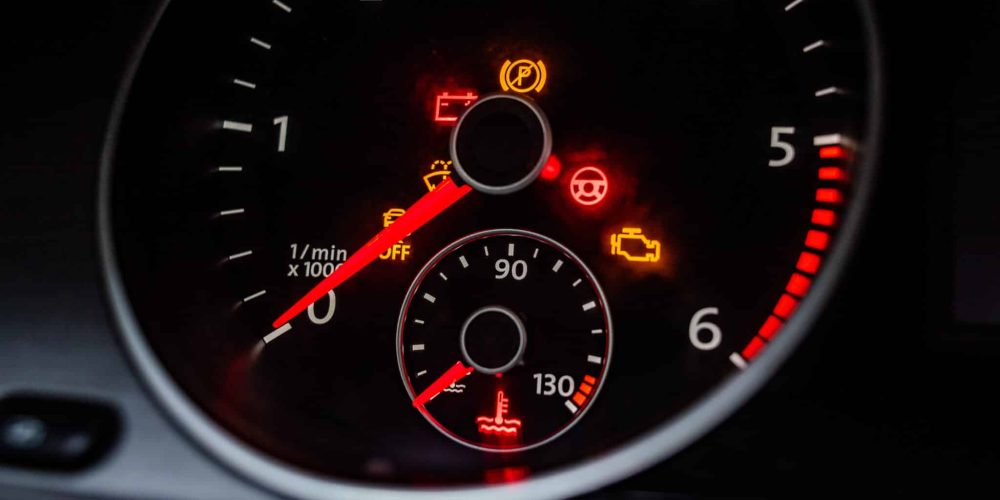
The power steering warning light means your vehicle has detected a problem in the system that helps you turn the wheel, and it exists because losing that assist without warning is dangerous. Still, the questions come up again and again. Can I keep driving, or do I need to pull over? How serious is this, really? Will it cost me a fortune to fix? Those are fair questions, and we plan on answering them. In this guide, we are going to walk through what the light actually means, what commonly causes it, how to tell an inconvenience from an emergency, and why a steering problem on a newer vehicle often reaches further into the car than most drivers expect. By the end, you will know what to do next and if you need professional help.
What Does the Power Steering Warning Light Mean?
The light, which is usually represented as a steering wheel icon with an exclamation point, means that the vehicle’s self-diagnostics found a fault in the power steering system. What that system looks like depends on the vehicle’s age. Older vehicles use hydraulic assist, where an engine-driven pump pushes pressurized fluid to help turn the wheels. More modern vehicles, on the other hand, use electric power steering. With this system, a torque sensor on the steering column measures how hard you are turning while an electric motor supplies the assist. On some vehicles, the electric version has its own light, often reading EPS.
The color and behavior of the light tell you how severe the problem is. An amber or steady light generally signals a fault and assistance may be reduced; it’s meant as a warning. A red light, or a light paired with steering that has suddenly gone heavy, means the system has shut assist off entirely, and you are steering manually, which signals a failure. The wheel still turns either way, because the mechanical linkage between your hands and the tires never disappears, but the effort difference at parking speeds is dramatic, and that difference is the whole reason the light exists.
What Causes the Power Steering Warning Light to Come On?
The causes run from cheap to serious, and the type of steering system narrows the list quickly.
On hydraulic systems, low fluid is the classic trigger, and low fluid nearly always means a leak in a hose, the pump, or the rack. A worn pump or a slipping drive belt shows up the same way, often with a whine or groan while turning as the giveaway.
On electric systems, there is no fluid to check, so the causes are electrical. Low system voltage from a weak battery or failing alternator is one of the most common and most overlooked triggers, since the assist motor draws serious current and the control module is quick to flag undervoltage. Beyond that, the usual suspects are a blown fuse, a failing torque sensor, a fault in the steering angle sensor, damaged wiring or connectors, or an assist motor that has overheated and temporarily reduced output after long low-speed maneuvering. Some vehicles will also set the light after a battery disconnect or a repair, when the system is simply waiting for a sensor relearn rather than suffering a hardware failure. That range, from a loose battery terminal to a failed rack, is exactly why the light deserves a proper diagnosis instead of a guess.
Is It Safe to Drive With the Power Steering Light On?
If the light is on but the steering still feels normal, the vehicle is drivable with caution. However, you should get it diagnosed soon, ideally within days, because a fault that starts as intermittent rarely stays that way. If the steering has gone noticeably heavy, drive only as far as it takes to get somewhere safe, and expect the wheel to require real muscle at low speeds. And if the assist is cutting in and out, treat it as an emergency and stop driving. Assist that vanishes mid-corner is more dangerous than assist that is simply gone, because it changes the steering effort at the moment you are least prepared for it.
There are two more moves worth making before you spend money. First, check whether the light came on right after a jump start or battery service, since a voltage event can set a code that a proper inspection will confirm as harmless. Next, run your VIN through the federal recall lookup, because loss of power steering assist has been the subject of recalls across several manufacturers, and a recall repair costs you nothing.
How Steering Problems Affect Your ADAS Features
On a modern vehicle, the steering system is not just something driver assistance features monitor. It is the actuator they use. Lane keep assist and lane centering steer the car by commanding the same electric assist motor that helps you park, and electronic stability control reads the same steering angle sensor to know where you intend to go. That shared hardware means a steering fault is rarely just a steering problem.
When the EPS system flags a fault, most vehicles respond by disabling or degrading every feature that depends on it. This is why a power steering light so often arrives with lane keep, stability control, or adaptive cruise warnings. The reverse is just as important: a steering angle sensor that is reporting a skewed center point feeds bad data to every ADAS feature downstream. A vehicle can pass a test drive in that state and still be wrong in the moment that matters most.
When Steering Work Requires Calibration
This is the step that separates a repaired vehicle from a safe one. Replacing a steering rack, column, EPS motor, or steering angle sensor, and even performing a routine wheel alignment, changes the relationship between the steering system’s idea of straight ahead and the vehicle’s actual direction of travel. After that work, the steering angle sensor typically needs a zero-point relearn with a scan tool. Also, the forward-facing camera and radar that rely on steering data often require full ADAS calibration so their aim matches the vehicle’s new geometry. Whether that calibration is static, dynamic, or both depends on the manufacturer, and each brand’s requirements are spelled out in its OEM position statements.
The trap is that a scan tool can clear the code and turn the light off without any of that being done. The dash looks clean, the customer drives away, and the lane keeping and stability systems are quietly working from a version of the road that is a few degrees off. Calibration is what closes that gap and keeps drivers safe on the road.
Find an ADAS Calibration Center Near You
A power steering warning light is not a suggestion, and the cost of ignoring it climbs the longer you wait. Knowing what the light means and how urgent it is puts you back in control of the decision instead of guessing in a parking lot. What most drivers do not realize is that steering repairs can leave driver assistance systems reading the road incorrectly until the vehicle is properly recalibrated. At Car ADAS Solutions, we support a growing network of calibration centers with the equipment, OEM procedures, and training required to get those systems back to spec. Clearing a code is not the same as making a vehicle safe again, and the difference shows up when you need the technology most. Use the Car ADAS Calibration Center Locator to find a professional calibration center near you.


