
Your windshield gets replaced on a Tuesday, and the shop mentions almost in passing that the camera behind it needs to be recalibrated. Maybe it is a collision repair instead, or an alignment, or a bumper replacement. Either way, you are now looking for a calibration shop, and you have no obvious way to judge whether the one down the street can actually do the work. That matters more than most drivers realize. A calibration that is performed in the wrong space, without the correct targets, or without the manufacturer’s procedure can leave a lane-keeping or emergency braking system pointed at the wrong part of the road while every dashboard light stays off. In this post, we’ll cover what a qualified ADAS calibration shop looks like, which questions to ask before you book, and the red flags that should send you somewhere else.
What an ADAS Calibration Shop Actually Does
ADAS calibration is the precise physical alignment and electronic aiming of the sensors that feed your vehicle’s advanced driver assistance systems, including the forward-facing camera behind the windshield, the radar unit behind the grille or bumper emblem, and any additional corner radars, lidar, or ultrasonic sensors the vehicle carries. Those sensors are what systems like automatic emergency braking (AEB) and lane keep assist use to decide when to brake, steer, or warn you, and each one only works if it knows exactly where it sits and where it is pointed relative to the vehicle. Research from the Insurance Institute for Highway Safety (IIHS) has found that AEB cuts rear-end crash rates roughly in half, but only when the sensors behind it see the road accurately.
A calibration shop restores that alignment after a repair disturbs it. Depending on the vehicle, that means a static calibration, where the car is positioned in a controlled indoor bay, and the sensors are aimed at manufacturer-specified targets placed at exact distances and heights, or a dynamic calibration, where a technician drives the vehicle through prescribed maneuvers so the system can relearn against real road data. Many vehicles require both. Calibration is not a diagnostic reset. Clearing a fault code or unplugging the battery does not re-aim a camera. A sensor can be off by a single degree, which puts its aim significantly off axis a hundred feet down the road, without ever setting a code at all.
What Repairs Trigger a Calibration?
Calibration is required after any repair or event that can move a sensor out of its factory position, and the list is longer than most people expect. Windshield replacement is the most common trigger, since the forward camera mounts directly to the glass or the bracket behind it, and even a perfect installation changes the camera’s viewing angle by a small amount. Collision repair is next, including low-speed impacts that never look serious, because a radar bracket behind a bumper cover can shift without any visible damage.
Suspension and alignment work also triggers calibration on many vehicles. Anything that changes ride height or thrust angle, such as new springs, tires of a different size, or a rear wheel alignment, changes where sensors point. Bumper and grille repairs matter for the same reason, since that is where the radar for adaptive cruise control and AEB typically lives. Finally, any time a sensor or camera is unplugged, removed, or replaced, most manufacturers require a calibration before the system can be trusted again, regardless of how the vehicle drives afterward.
Six Things a Qualified Calibration Shop Should Have
Once you know a calibration is needed, the question becomes how to separate an equipped calibration center from a shop that dabbles. Equipment manufacturers publish their own equipment and facility considerations for this work, and they align closely with what you should look for as a customer. Six things stand out:
- OEM-approved targets and fixtures. Static calibration uses patterned targets specific to each manufacturer, positioned to millimeter-level tolerances. A qualified shop owns or has access to the correct target sets for the makes it services, not a single universal target it uses for everything.
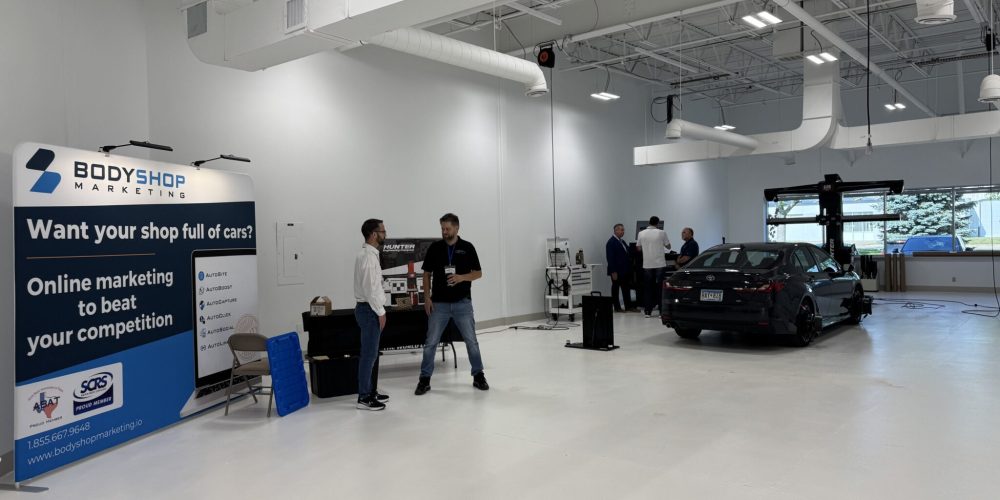
- A controlled, level calibration bay. Manufacturer procedures specify floor levelness, clear space around the vehicle, uniform lighting, and neutral wall surfaces, and some vehicles need thirty feet or more of open floor in front of the sensor. A parking lot or a crowded service bay does not meet those requirements.
- Current scan tools and software subscriptions. Calibration is initiated and verified through diagnostic software that must be updated continuously as new model years arrive. Out-of-date software is a quiet way for a calibration to fail.
- Technicians trained specifically for calibration. This is specialized work, distinct from collision repair or glass installation, and shops that take it seriously invest in dedicated training and certification for the people doing it.
- Pre-scan and post-scan procedures. A qualified shop scans the vehicle before work begins to document existing faults, and scans again after calibration to verify every system reports correctly.
- Documented results. You should leave with a calibration report showing what was calibrated, the procedure used, and confirmation the vehicle passed. This is useful both for your own records and for any insurance or liability questions that come later.
Why Access to OEM Procedures Is Non-Negotiable
Every item on that checklist depends on the shop working from the vehicle manufacturer’s actual procedure, because the requirements are not interchangeable between brands or even between model years of the same vehicle. One manufacturer may require a static calibration in a controlled bay before any road driving while another may specify a dynamic procedure (many require both in a specific order). Target types, distances, fuel level, tire pressure, and even whether a full tank or added weight is required all vary by OEM. A shop working from generic instructions is guessing, and a guessed calibration can pass its own checks while leaving the sensor aimed somewhere the manufacturer never intended. When you ask a shop where its procedures come from, the right answer names the manufacturer’s technical information system, not a one-size-fits-all chart.
Questions Worth Asking Before You Book
You do not need to be a technician to vet an ADAS calibration company. A few direct questions will reveal most of what you need to know.
- Ask where their calibration procedures come from, and listen for OEM technical information rather than something vague.
- Ask whether they can perform both static and dynamic calibration, since a shop that only offers one will quietly skip requirements it cannot meet.
- Ask what documentation you will receive, and expect a printed or digital report rather than a line on an invoice.
- Ask whether they calibrate your specific make regularly, because target sets and procedures are brand-specific and experience with your manufacturer matters.
- Finally, ask what happens if the calibration does not complete, since a professional shop will talk about diagnosing root causes rather than clearing codes and returning the car.
The red flags are the mirror image of those answers. A shop that says your vehicle just needs a scan, quotes a calibration performed in the corner of an active shop floor, cannot describe its targets or procedures, or hands back keys with no paperwork is telling you it is not equipped for this work.
Find a Qualified Calibration Center Near You
An ADAS calibration is not a diagnostic reset or a software update. It is a physical alignment of the sensors your vehicle uses to decide when to brake, when to steer, and when to warn you, and it only holds up when it is performed to the manufacturer’s specification in a space that meets the requirements. The shops that do this well are equipped for it deliberately, with the right targets, the right procedures, verified measurements, and paperwork that proves the work was completed correctly. The shops that are not equipped for it can still hand your keys back with a clean dashboard, which is exactly what makes the choice worth a few minutes of research. Car ADAS Solutions supports a growing network of calibration centers built around OEM procedures, proper equipment, and technicians trained specifically for this work. Use our Calibration Center Locator to find a professional calibration center near you.


