
The speed limit icon on the dash reads 45 on a road that has been posted 65 for the last ten miles. Somewhere back there, the camera caught a sign on an exit ramp, or a truck’s decal, or a temporary sign in a work zone, and the system has been confident about it ever since. Traffic sign recognition works well enough that most drivers stop noticing it, which is exactly why the misses stand out. Behind that icon sits a forward-facing camera reading painted metal at highway speed, software deciding what it is looking at, and in most modern vehicles, stored map data quietly checking the answer. In this post, we’ll cover what traffic sign recognition is, how a sign gets from the roadside to your dash, what different vehicles do with the information once they have it, why the system gets fooled, and what has to happen after a repair to put the camera back where it belongs.
What Is Traffic Sign Recognition?
Traffic sign recognition (TSR) is a driver assistance feature that uses a forward-facing camera to identify road signs and display them to the driver, usually in the instrument cluster or a heads-up display. It’s a passive system in most vehicles, meaning it informs the driver rather than taking control. It belongs to the same family of ADAS features as lane departure warning.
Speed limit signs are the primary target, and they’re the only signs many systems read. More capable systems also recognize stop signs, do not enter signs, and no passing zones. Honda’s traffic sign recognition system, for example, identifies speed limit, stop, no passing, and no entry signs, then clears the speed limit display after the vehicle travels a set distance or turns at an intersection.
Automakers sell the feature under many names, including Road Sign Assist, Traffic Sign Assist, and Speed Limit Info, which is part of why ADAS feature names confuse so many drivers. The hardware underneath is largely the same.
How Does a Car Read a Road Sign?
Reading a sign at highway speed takes a fraction of a second.
- Capture. A camera mounted behind the windshield near the rearview mirror records the road ahead many times per second. This is typically the same ADAS camera that handles lane detection and forward collision warning.
- Detection. Software scans each frame for shapes and colors that match sign designs. In the U.S., signs follow the federal Manual on Uniform Traffic Control Devices, so a speed limit sign is always a white vertical rectangle with black lettering, which gives the software a consistent pattern to look for.
- Classification. A trained neural network determines what type of sign it is, and character recognition reads the numbers.
- Confirmation. The system tracks the sign across several frames to confirm the reading before sending it to the display.
Most modern vehicles add a second layer. Navigation map data contains speed limits for most roads, and the system compares what the camera sees against what the map says. When a sign is blocked by a truck or hidden by trees, the map fills the gap. When a new sign contradicts the map, the camera usually wins, since maps are only as current as their last update. Suppliers like Mobileye have built this pairing of vision and crowdsourced map data into their sign recognition systems, and it’s a major reason accuracy has improved.
What Vehicles Do With the Information
After the sign is read, vehicles generally do one of these three options:
- Display only: The system shows the current speed limit or sign on the dash. The driver decides what to do with it.
- Overspeed warning: The vehicle compares its speed with the detected limit and alerts the driver with a flashing icon or a chime when the vehicle exceeds it, often by a threshold the driver can set.
- Intelligent speed assistance: The most advanced systems connect TSR to adaptive cruise control. When the vehicle passes a new speed limit sign, the system can adjust the set speed automatically or prompt the driver to accept the change.
As traffic sign recognition becomes more connected to other driver-assistance features, accurate sign detection matters more than ever. However, TSR is not foolproof, and several real-world conditions can limit its accuracy.
What Are the Limitations of Traffic Sign Recognition?
Several situations regularly trip TSR up.
- Sign condition: Faded, bent, dirty, or vandalized signs are harder to read, especially at night. Federal minimum sign retroreflectivity requirements exist because sign visibility degrades over time, and the camera struggles with the same worn signs drivers do.
- Weather and light: Heavy rain, snow, fog, and low sun glare all reduce what the camera can see.
- Windshield condition: Dirt, ice, or a cracked windshield in the camera’s field of view blocks the image.
- Ambiguous placement: Exit ramp signs, signs for parallel roads, and speed limits printed on the back of trucks can all be misread as applying to the vehicle’s lane.
- Conditional signs: School zones, “when flashing” signs, truck-specific limits, and time-based restrictions are difficult for software to interpret.
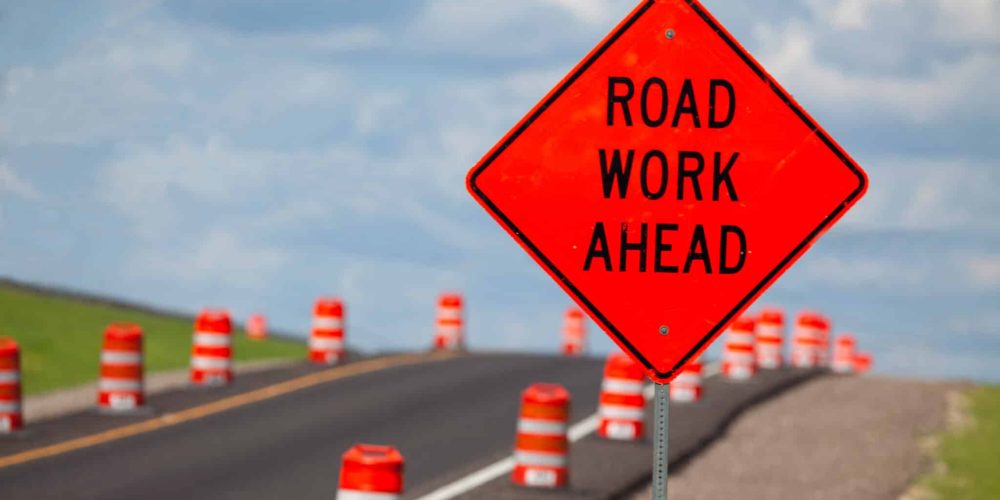
- Work zones: Temporary signs often conflict with the permanent limit and with map data.
- Outdated maps: When a speed limit changes and the map hasn’t caught up, a missed camera reading leaves the wrong number on the display.
These are part of the broader ADAS limitations that keep TSR a driver aid, and a camera aimed even slightly off makes every one of them worse.
When Does the Traffic Sign Recognition System Need to Be Calibrated?
The forward-facing camera behind the TSR has to be aimed precisely relative to the vehicle’s centerline and the road. Any repair that moves the camera, its mount, or the vehicle’s geometry can throw off that aim. The most common triggers are:
- Windshield replacement: The camera bracket is attached to the glass, so replacing the windshield means re-establishing the camera’s aim through windshield calibration.
- Collision repair: Front-end damage, even when the camera wasn’t touched, can shift structural reference points.
- Wheel alignment: Changes to thrust angle alter the direction the vehicle actually travels, which is why wheel alignment is tied to ADAS calibration.
- Suspension work or ride height changes: Lift kits, lowering, and even worn springs change the camera’s pitch relative to the road.
- Camera removal or replacement: Any time the camera comes off the mount, it needs to be calibrated when it goes back on.
Depending on the manufacturer, ADAS camera calibration is performed statically with targets in a controlled shop environment, dynamically on the road, or with a combination of both. Clearing a code does not restore aim. Only a calibration performed to OEM procedures does.
For shop owners, this is a steady source of work. Every vehicle with a forward-facing camera that comes through for glass, collision, or alignment work is a potential calibration job, and demand for ADAS services keeps growing as the feature spreads.
Start Your Own ADAS Calibration Center with Car ADAS
Traffic sign recognition looks like a simple display feature, and underneath it is a camera doing a difficult job at speed, backed by map data that is only as current as its last update. The accuracy of all of it depends on aim. A windshield replacement, a front-end repair, or a suspension change can leave the camera reading the road from the wrong position, and clearing a code does not put it back. That is the part shop owners should be paying attention to. Every vehicle with a forward-facing camera that passes through a glass bay, a collision shop, or an alignment rack is a calibration event waiting to happen, and the number of those vehicles on the road grows every model year. Car ADAS Solutions helps shop owners and entrepreneurs build calibration centers with the framework, targets, equipment, software, OEM procedure access, training, and ongoing technical support to do the work correctly from day one. Learn how to start your own ADAS calibration center with Car ADAS today.


