
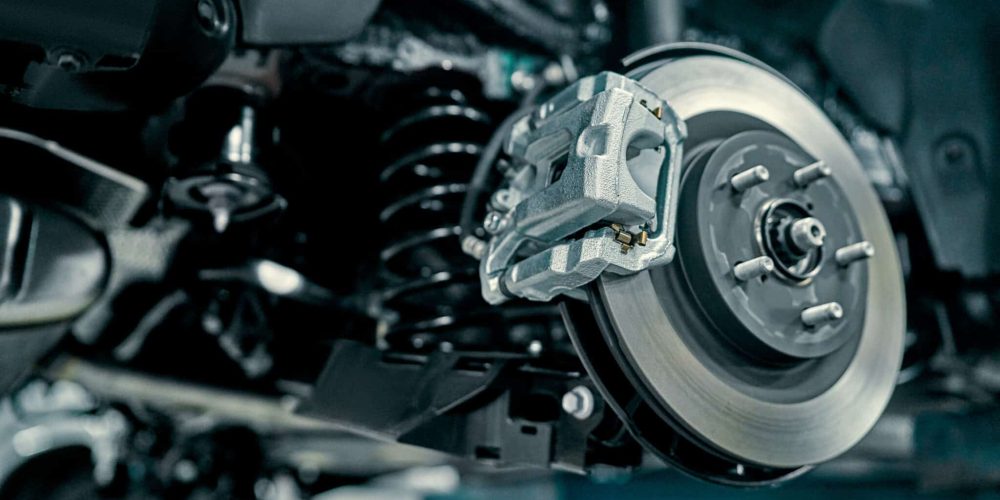
Anti-lock Braking Systems (ABS) are safety systems in vehicles that prevent the wheels from locking up during braking, ensuring that the vehicle maintains steering control and helping to reduce stopping distances on slippery surfaces. At the heart of this system, a network of valves, brake lines, sensors, control units, and modules all work together to modulate braking force to each wheel based on its traction and stability. In this post, we will explore how ABS systems work within your car and how they integrate with Advanced Driver Assistance Systems (ADAS) to make our roads safer.
Understanding How ABS Works
ABS is designed to prevent the wheels from locking up during intense braking scenarios, ensuring the driver maintains steering control. This system relies on an intricate network of wheel speed sensors that constantly monitor the rotational speed of each wheel. When a wheel speed sensor detects a quick reduction in wheel speed — meaning that the wheel is on the verge of locking — the ABS control unit reduces the brake pressure through a series of rapid-fire hydraulic pulses. These pulses allow each wheel to spin up to speed, regaining traction and avoiding skid. Ultimately, ABS performs a balancing act, applying just enough pressure to slow the vehicle down as quickly as possible without causing the wheels to lock up.
For instance, imagine driving on a wet and slippery road when suddenly, the car in front of you stops abruptly. With ABS, when you slam on the brakes, the system will kick in to prevent the wheels from locking. You’ll feel a pulsating sensation through the brake pedal as the system rapidly modulates the braking pressure, allowing you to steer around the obstacle while safely slowing down. ABS are designed to provide a safety net that adapts to the road’s conditions and the situation’s urgency.
In 2012, NHTSA started to require ABS to be present in vehicles manufactured in the United States. This decision was made to ensure maximum safety for drivers and passengers on the road.
Types of ABS Systems
There are two main types of ABS systems: four-channel and three-channel. A four-channel system has a wheel speed sensor for each wheel, while a three-channel system only has one sensor for the rear wheels and two for the front wheels. Four-channel systems are considered more advanced as they allow for precise control over each wheel, resulting in better vehicle stability.
Why Anti-Lock Braking Systems Are Important
ABS technology is instrumental in improving the stopping performance of vehicles, particularly on slippery surfaces. Cars equipped with ABS have been proven to stop more quickly and safely than those without the system, reducing the likelihood of accidents. They also provide better steering control, preventing the wheels from locking up and skidding on different road conditions.
Car and Pedestrian Safety
ABS is a safety feature that benefits not only drivers, but also other vehicles and pedestrians sharing the road. By preventing wheel lockups during sudden stops, ABS helps drivers retain control and steer away from hazards instead of sliding uncontrollably. This added control can make a significant difference in emergency situations, especially in urban areas or heavy traffic where quick reactions are required to avoid collisions with cars, cyclists, or pedestrians.
Brake Wear and Tear
In addition to its safety benefits, ABS can help extend the life of brake components over time. When wheels lock up during hard braking, excessive heat and friction can build rapidly, leading to accelerated wear on brake pads and rotors. ABS reduces this stress by modulating brake pressure, allowing the braking system to work more efficiently. As a result, drivers may experience more consistent braking performance and fewer premature brake repairs.
Insurance and Resale Value
The presence of ABS can also positively influence insurance costs and long-term vehicle value. Insurers often view ABS-equipped vehicles as lower risk due to their improved braking control and reduced accident potential, which can lead to more favorable premiums. From a resale standpoint, vehicles with ABS are generally more appealing to buyers, as the system is widely recognized as an essential safety feature and is expected in most modern vehicles.
ABS has evolved into a critical safety feature in modern vehicles. Its ability to maintain traction and control during sudden stops and its potential for cost savings make ABS a must-have technology for all drivers.
How ABS Works with ADAS to Increase Driver Safety
In modern vehicles, ABS is just one component of a comprehensive active safety system. Many of these systems are part of the broader category of Advanced Driver Assistance Systems (ADAS). ADAS technologies use sensors, cameras, and other devices to gather data about the vehicle’s surroundings and assist the driver in various situations. When combined with ABS, these active systems can increase driver safety in ways that ABS alone cannot.
- Collision Avoidance Systems: A combination of ABS and ADAS technology that detects objects in front of a vehicle and applies brakes to avoid or mitigate collisions. These systems use sensors, cameras, and radar to identify potential obstacles and trigger the brakes if a collision is imminent. If the road conditions are bad or the vehicle needs to stop quickly, ABS will work with collision avoidance systems to ensure the safest and most efficient braking possible.
- Automatic Emergency Braking: AEB is a part of the greater collision avoidance system that automatically applies the brakes when it detects a potential collision. When combined with ABS, AEB can work to safely control the vehicle while decreasing the speed.
This synergy between ABS and ADAS can improve driver confidence and safety by assisting in potentially dangerous situations. As technology advances, these systems will only become more sophisticated and play an even greater role in ensuring safe driving for all.
The Future of Anti-Lock Braking Systems
The future of Anti-lock Braking Systems (ABS) is bright, with advancements in technology and integration with other safety systems. Some developments that we can expect to see in the future of ABS include:
Artificial Intelligence and Machine Learning: AI and machine learning algorithms are set to revolutionize ABS by enabling predictive braking systems. These systems can anticipate the need for braking before the driver reacts, adjusting the brake pressure preemptively to avoid accidents.
Advanced Sensor Technology: The evolution of sensor technology promises to enhance the sensitivity and accuracy of ABS. More precise sensors will improve the system’s ability to detect wheel slip and adjust braking force more effectively, even under challenging conditions.
Vehicle-to-Everything (V2X) Communication: V2X communication will allow ABS to interact with a broader ecosystem, including other vehicles and road infrastructure. This connectivity could enable ADAS systems to react to hazards beyond the driver’s immediate field of vision and adjust the ABS as needed.
Challenges and Research Directions: Despite all the technological advancements, there are still challenges that need to be addressed for ABS to reach its full potential. For instance, research on enhancing ABS performance during emergency braking situations and on slippery surfaces is ongoing. There is also a need for further research on integrating ABS with other safety systems like Electronic Stability Control (ESC) and Traction Control System (TCS).
Continued research and development will be crucial in overcoming these challenges, paving the way for a future where ABS and its related technologies offer revolutionary levels of safety on the roads.
The Importance of ABS Sensor Calibration
As vehicles become increasingly advanced, the proper calibration of ABS sensors has become just as critical as the system itself. ABS relies on accurate wheel speed data from individual sensors mounted near each wheel. These sensors constantly measure the rotation speed of each wheel and feed this information to the ABS control unit in real time. If even one sensor becomes misaligned, dirty, or damaged, the entire ABS system may fail to respond correctly during emergency braking.
Improper calibration or faulty sensor data can also trigger warning lights, disable traction control, or cause the ABS to activate unnecessarily, all of which reduce driver confidence and compromise safety. For ADAS-equipped vehicles, where ABS works in tandem with lane departure prevention, automatic emergency braking, and adaptive cruise control, a single miscalibrated sensor can create a ripple effect of inaccurate system behavior.
Professional ABS diagnostics and calibration require specialized scan tools that can read sensor values, reset codes, and perform real-time system tests. In many cases, calibration is necessary after suspension work, brake service, tire size changes, or wheel alignment. And for ADAS calibration centers, offering ABS diagnostics as part of your broader service menu ensures every safety system functions together as intended.
Start Your Own ADAS Calibration Center with Car ADAS
ABS systems play a large role in preventing accidents and reducing stopping distances. With the integration of ADAS, they continue to evolve and improve, making driving safer for everyone on the road. However, as this technology evolves, it’s important to keep in mind that these systems need to be accurately calibrated and maintained correctly. Our ADAS solution enables you to start and operate your own ADAS calibration center. Contact us today for more information or to get started!
ABS FAQs
What happens if my ABS stops working?
If ABS stops working, your vehicle can still brake, but the wheels may lock during hard braking. This increases the risk of skidding and loss of steering control, especially on wet or icy roads. An ABS warning light usually means the system needs diagnosis.
Does ABS reduce stopping distance in all conditions?
ABS is most effective on slippery surfaces like rain, snow, or gravel. It helps maintain traction and steering control in these conditions. On dry pavement, stopping distance may be similar to standard braking, but vehicle stability is improved.
Can ABS problems affect other safety systems?
Yes. ABS shares wheel speed data with traction control, stability control, and many ADAS features. A faulty ABS sensor can cause multiple safety systems to malfunction or disable entirely.


