
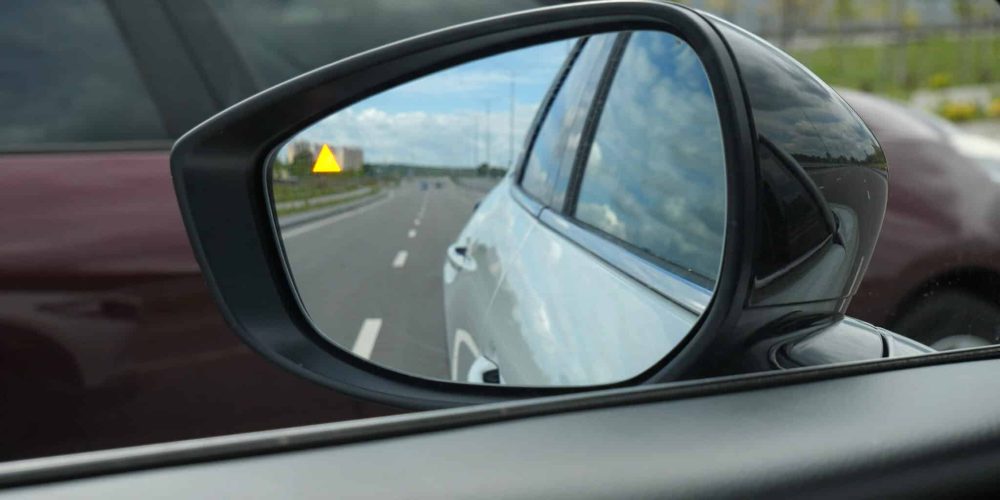
Blind spot detection (often called BSM, BSD, BLIS, or side detection) is an ADAS safety feature that watches the areas beside and slightly behind your vehicle that are hard to see in the mirrors, and alerts you when another vehicle or object is present. Most systems use small radar modules mounted near the rear corners of the vehicle, in or behind the bumper cover, though some manufacturers integrate them into tail lamps or quarter panels, and a few designs use cameras or ultrasonic sensors.
These sensors constantly scan the lane next to you. When something enters the detection zone, the indicator light in your side mirror or on the A-pillar turns on. If you signal a lane change toward an occupied lane, the system usually adds a louder or more aggressive warning.
Blind spot detection usually stops working for one of a few reasons: dirty or obstructed sensors, physical damage to the bumper or sensor area, missing calibration after a repair, or an electrical or wiring fault. Some of these you can fix at home, and some require a professional scan and recalibration. We cover each cause in detail below.
Where blind spot detection fits into ADAS
The blind spot monitoring system does not operate on its own. It shares control units, wiring networks, and sometimes sensors with other ADAS features, and it works in harmony with systems such as:
- Rear cross traffic alert
- Lane change assist
- Rear automatic braking
- Safe exit warning or door open alerts
This matters because a problem that starts as a simple blind spot sensor issue can ripple into these other systems, and changes to those systems can affect blind spot performance too.
With that big picture in mind, let us look at why blind spot detection stops working in the first place.
Common Reasons Blind Spot Detection Stops Working
When you find yourself asking why blind spot detection is not working, the root cause usually falls into a handful of categories. You might see messages like:
- “Blind spot monitor unavailable”
- “Service side detection system”
- “Side detection temporarily unavailable”
- A blind spot light that stays on, never comes on, or behaves unpredictably
Here are some of the most common reasons behind those warnings.
- Dirt, snow, or road grime covering the sensors
This is more common than most drivers realize. Because the sensors are typically mounted behind the rear bumper cover or in the side corners, they get hit by everything the road throws at the vehicle. Mud, heavy rain residue, road salt, ice, and even a pressure wash gone wrong can temporarily block the sensor’s view.
Many vehicles will shut down the system or display a “temporarily unavailable” message when the sensors are blinded. Once the obstruction is gone, the system may come back on its own after a short drive.
- Physical damage to the bumper or sensor area
A minor tap in a parking lot can be enough to disturb a radar sensor. Even if the bumper cover looks fine, the bracket behind it might be cracked, bent, or broken, or a connector could be partially unplugged. This can happen right after:
- Backing into a pole or barrier
- Being rear-ended, even at low speed
- Having the rear bumper repaired or replaced
Radar sensors rely on millimeter-level positioning accuracy. If they are tilted or shifted slightly, they may read the world incorrectly or fail checks and shut off.
- Misalignment or missing calibration after repairs
Any repair that affects the rear bumper, rear body structure, or suspension may require blind spot sensor calibration. That includes:
- Collision repairs
- Quarter panel or bumper refinishing
- Rear alignment changes
- Some tow hitch installations
If the sensor was removed and reinstalled, or if the vehicle was straightened on a frame machine, the original calibration is no longer valid. Industry research has shown that even minor impacts or panel changes can throw ADAS sensor alignment off and create safety risks if the systems are not calibrated.
- Electrical or wiring issues
Modern ADAS technology is very sensitive to voltage and communication problems. A blind spot sensor that loses power or data for even a moment can set a fault and disable the feature. Common culprits include:
- Corroded connectors near the rear of the vehicle
- Damaged wiring harnesses from previous repairs or trailer wiring
- Water intrusion into the bumper area
On many vehicles, these issues trigger fault codes that only appear when a technician scans the vehicle with a professional diagnostic tool.
Now that you have a sense of what can go wrong, let us talk about some of the best troubleshooting techniques.
When to See an ADAS Specialist or Technician
If the blind spot detection system has become unreliable, it is not just an inconvenience. It is a change in how drivers rely on their vehicles to keep informed about surrounding traffic.
Drivers should plan to see an ADAS specialist if:
- The system has been down for more than a day despite cleaning and basic checks
- There are any “service side detection system” or similar messages that sound permanent, not temporary
- The vehicle was recently in a collision, even if the damage seemed minor
- A glass shop, body shop, or mechanic recently worked on the rear of the vehicle, and the warning started afterwards
Why ADAS calibration is not a do-it-yourself (DIY) task
Blind spot systems are calibrated using static and dynamic calibration techniques, specific targets, distances, and procedures that vary by manufacturer.
Technicians need:
- A level, properly lit calibration space
- Dedicated alignment racks, radar reflectors, and target boards
- Factory service information for the exact year, make, and model of vehicle
- Professional scan tools that can initiate and verify calibration routines
Industry guidance stresses that skipping calibration or guessing at sensor alignment after repairs can compromise system performance and expose shops to liability issues.
Find a Calibration Center Near You
If a vehicle’s blind spot detection system is acting up or failing altogether, the next step is to find a calibration center equipped to diagnose and correct the issue. Blind spot sensors rely on precise alignment to function properly, and a trained technician can verify alignment, perform necessary calibrations, and confirm communication with the rest of the ADAS. Use our calibration center locator to find a qualified facility near you to get your blind spot system restored with the accuracy your vehicle depends on.


