
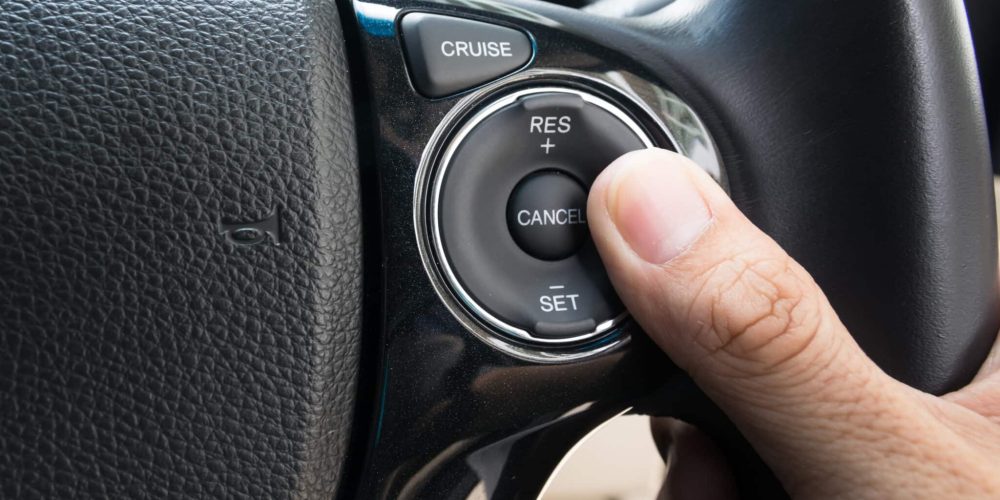
If your cruise control is not working, you are probably wondering what caused it and whether it is something minor or something more serious. In older vehicles, cruise control systems were relatively simple. Today, they are deeply connected to advanced safety features like radar sensors, forward-facing cameras, braking systems, and electronic control modules. That means a small issue in one area can disable the entire system as a safety precaution. Below, we will walk you through the most common reasons cruise control stops working, from electrical faults and brake switch problems to adaptive cruise control sensor issues. You will learn how modern cruise systems operate, what dashboard warnings really mean, and why recent repairs, such as windshield replacement or bumper work, can affect performance.
How Does Cruise Control Work in Modern Vehicles?
Before diagnosing why your cruise control stopped working, it helps to understand how the system functions.
Traditional Cruise Control
Traditional cruise control is relatively straightforward. Once activated at a certain speed, the system uses the vehicle’s throttle control to maintain that speed without you pressing the accelerator.
It relies on:
- Vehicle speed sensors
- The throttle body or electronic throttle control
- Steering wheel input switches
- The brake switch
If you press the brake pedal, the system immediately disengages for safety. These systems are primarily mechanical and electrical in nature. If a fuse blows or a brake switch fails, cruise control may stop working.
Adaptive Cruise Control (ACC)
Adaptive Cruise Control is significantly more advanced.
Instead of simply maintaining speed, ACC:
- Uses forward radar sensors
- Often integrates a windshield-mounted camera
- Calculates distance to vehicles ahead
- Automatically adjusts speed to maintain a safe following gap
The radar measures the distance and relative speed of the vehicle in front of you. The camera confirms object detection. The vehicle’s computer calculates time-to-collision and adjusts throttle or braking accordingly. This is where the difference between normal cruise control and adaptive cruise control becomes critical. ACC depends on precise sensor alignment. If those sensors are even slightly misaligned, the system may disable itself entirely.
Why Is My Cruise Control Not Working? Most Common Causes
There are several possible explanations for a faulty cruise control system. Some are simple. Others involve advanced driver assistance systems and require professional evaluation.
Electrical or Fuse Issues
One of the most basic reasons cruise control stops working is an electrical fault.
Possible causes include:
- Blown fuses
- Faulty wiring
- Defective steering wheel controls
- Malfunctioning brake light switch
If the vehicle detects an inconsistency in the brake switch signal, it will disable cruise control immediately. The system must know with certainty when braking occurs.
Brake System Problems
Modern vehicles will not allow cruise control to operate if there is a brake system issue.
This includes:
- ABS faults
- Traction control errors
- Brake light switch malfunctions
Cruise control systems rely on input from multiple modules. If one module reports a fault, cruise may be shut down as a precaution.
Sensor Obstruction or Contamination
For vehicles equipped with adaptive cruise control, sensor obstruction is a common cause. Radar sensors are typically located behind the front grille or emblem. Cameras are mounted behind the windshield near the rearview mirror.
Cruise control may stop working if:
- Ice or snow covers the radar
- Dirt blocks the sensor
- The windshield camera is obstructed
- Aftermarket bumper covers interfere with radar transmission
Even temporary obstructions can disable ACC.
Recent Repairs or Windshield Replacement
This is one of the most overlooked reasons cruise control stopped working.
If you recently had:
- A windshield replaced
- Front bumper repair
- Grille replacement
- Minor collision repair
Your adaptive cruise control system may require calibration. Radar sensors and cameras are mounted with extremely tight tolerances. A shift of even a fraction of a degree can change detection range dramatically.
For example, a radar misalignment of just one degree can shift the detection path several feet at highway speeds. That means your system may not detect a vehicle directly in front of you or may detect objects incorrectly. When that happens, the vehicle disables adaptive cruise control as a safety measure.
Traditional vs Adaptive Cruise Control Issues
It is important to distinguish between traditional and adaptive cruise control problems.
Traditional cruise control issues typically involve:
- Electrical faults
- Brake switch failure
- Throttle control issues
- Steering wheel switch malfunction
These systems do not rely on radar or cameras.
Adaptive cruise control, however, builds on traditional cruise functionality and adds advanced sensor technology. If your vehicle displays both a cruise control warning and an ADAS warning light, you are likely dealing with an adaptive cruise control issue rather than a basic electrical fault.
Understanding this difference is critical. Adaptive cruise systems are deeply integrated with forward collision warning and automatic emergency braking systems. When one system is compromised, others may be disabled as well.
What Dashboard Warnings Should You Look For?
When cruise control is not working, your dashboard often provides clues.
Common warning indicators include:
- Cruise control indicator flashing
- Adaptive cruise unavailable message
- Forward collision warning light
- Lane assist malfunction
- “Front radar blocked” message
In some cases, you may notice cruise control stopped working while driving, followed by a warning message. Modern vehicles continuously monitor system integrity. If a sensor reports inconsistent data, the system will deactivate cruise control immediately. It is important not to ignore these warnings. They are not just comfort features. In adaptive systems, they are directly tied to safety technologies.
What Should You Do If Your Cruise Control Stops Working?
If your cruise control is not working, avoid guessing.
Start by noting:
- Any recent repairs
- Whether warning lights are present
- Whether the issue occurred suddenly or after service
If your vehicle recently had front-end work or windshield replacement, calibration should be your first consideration.
Modern vehicles require specific calibration procedures after:
- Windshield replacement
- Bumper removal
- Radar sensor replacement
- Suspension repairs affecting ride height
Even minor structural adjustments can alter sensor angle.
Why ADAS Calibration is So Important for Cruise Control Issues
Adaptive cruise control relies on radar and camera systems that must be aligned precisely to manufacturer specifications.
Calibration ensures that:
- Radar sensors point at the correct angle
- Cameras detect objects at accurate distances
- Time-to-collision calculations remain reliable
- Braking intervention triggers at the right moment
There are two primary calibration types:
Static Calibration
Performed indoors using manufacturer-specified targets placed at exact distances and heights.
Dynamic Calibration
Performed while driving under controlled conditions so the system can calibrate in motion.
Both require specialized equipment and precise measurement.
Without proper calibration, adaptive cruise control may:
- Respond too late
- Respond too early
- Fail to detect vehicles
- Trigger false warnings
This is why professional calibration is essential. Modern ADAS systems are designed to err on the side of safety. If the vehicle cannot confirm sensor alignment, it disables cruise control rather than risk improper operation. A trained ADAS technician will make sure all sensors and cameras are accurately aligned and functioning correctly. Proper calibration not only restores the full functionality of adaptive cruise control but also ensures the system operates within the manufacturer’s safety standards.
Find a Professional ADAS Calibration Center in Your Area
In some cases, a cruise control issue may be minor, such as an electrical fault or temporary sensor obstruction. In other situations, especially after windshield replacement or front-end repairs, your vehicle may require proper ADAS calibration to ensure sensors are aligned to manufacturer specifications. When calibration is off, features like adaptive cruise control and forward collision systems may not respond as intended. The best next step is to have your vehicle inspected by a certified calibration technician who can evaluate your car and reset it to manufacturer standards. To make this easier, we created a page that helps you locate trusted centers that specialize in ADAS calibration. Visit our ADAS Calibration Center Network page to schedule an appointment and get your safety features functioning properly.


