
Every driver assistance feature on a modern vehicle depends on sensors that are aimed with real precision. The camera behind the windshield, the radar behind the grille or bumper, and the sensors at each corner all have to point exactly where the manufacturer intended. When one of them is off by even a small amount, the system keeps working with a skewed view of the road. Lane keeping starts to drift or tug, adaptive cruise control misjudges the car ahead, and warnings show up when nothing is there or stay silent when something is. The cause is often ordinary, such as a windshield replacement, a minor bumper hit, or a wheel alignment. In this post, we’ll explain what ADAS sensor alignment means, what throws it off, the signs to watch for, and how alignment issues are corrected.
What Is ADAS Sensor Alignment?
Sensor alignment is the physical relationship between a sensor’s aim and the vehicle it is bolted to. Each ADAS sensor is designed to look along a specific line, usually referenced to the vehicle’s thrust line, which is the direction the rear wheels push the car. The forward camera expects the horizon at a particular pixel row and the lane lines at a particular angle. The front radar expects straight ahead to be straight ahead, in both yaw and pitch. The corner radars behind the rear bumper expect their field of view to cover a defined wedge of the adjacent lane.
Alignment and calibration are related but not the same thing, and the difference matters when you are deciding what a repair needs. Alignment is where the sensor points. Calibration is the process of teaching the vehicle’s control module where that sensor actually points, so the software can correct for small deviations. A proper ADAS calibration measures the sensor’s real aim against targets placed at known positions and stores the offsets. If the sensor is within the range the software can compensate for, calibration fixes the problem. If it has been knocked beyond that range, the mounting has to be corrected first and then the calibration is performed.
That distinction explains why a sensor can be mechanically mounted, undamaged, and still wrong. The forward camera on most vehicles is bonded to a bracket on the windshield glass. Replace the glass and the camera comes off and goes back on, and even a well-fitted windshield seats a fraction of a degree differently than the one it replaced. Nothing is broken, but the stored calibration now describes a camera position that no longer exists. The ADAS cameras, radar sensors, and ultrasonic sensors on a vehicle all share this dependence on being exactly where the module thinks they are, and sensor fusion compounds it, because a misaligned radar and a correctly aimed camera will disagree about where the car ahead is.
What Causes ADAS Sensor Alignment Issues?
The events that disturb sensor aim are rarely dramatic. Most of them are routine service and minor incidents that would not have mattered on a vehicle built fifteen years ago.
Windshield replacement is the most common. The forward camera, and on many vehicles the rain and light sensors that share its housing, mount to the glass. Any time the glass is replaced, the camera’s position relative to the vehicle changes, which is why windshield calibration is required by nearly every manufacturer after glass work. This holds even when the camera itself was never touched and even when the new glass is OEM.
Collision damage, including the kind that does not look like damage, is next. The front radar sits behind the grille emblem or in the lower fascia, and a parking lot bump that cracks a bumper cover or shifts a bracket can rotate the radar by a degree without leaving a mark on the sensor. Rear corner radars for blind spot monitoring and rear cross traffic alert live inside the rear bumper and are just as exposed. Front-end work that involves removing the bumper, replacing a grille, or straightening a radiator support almost always disturbs radar aim.
Wheel alignment and suspension work change the vehicle’s thrust angle, and the sensors are aimed relative to that angle. A rear toe adjustment moves the direction the car actually travels, so a camera and radar that were perfect before the alignment are now looking slightly off the vehicle’s true path. The same is true for ride height changes from new springs, a lift kit, lowering, or even a heavily loaded vehicle, because the pitch of the forward sensors changes with the attitude of the body. Wheel alignment best practice on ADAS-equipped vehicles treats sensor calibration as part of the alignment, not an afterthought.
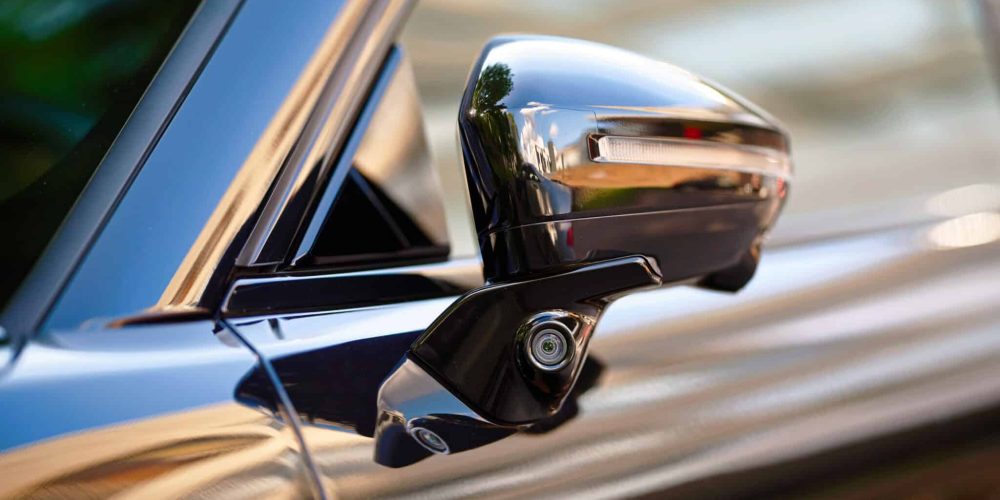
Then there is everything else. A new set of tires in a different size changes ride height and speed signals. A replaced side mirror on a vehicle with mirror-mounted cameras resets that camera’s position. Battery replacement or a module reflash can clear stored calibration values on some platforms. A steering angle sensor that was not reset after a steering rack or clock spring job feeds the lane keeping system the wrong idea of where the wheels are pointing. None of these are failures. They are ordinary work that changed something the sensors were referenced to.
Signs of a Misaligned ADAS Sensor
Because a misaligned sensor still produces data, the symptoms are usually about the quality of the features rather than their absence. Drivers tend to describe them as the car “acting weird” rather than as a fault.
Lane keep assist and lane centering are the most sensitive to camera aim. If the camera is rotated even slightly, the system perceives the vehicle as off center and steers to correct an error that does not exist. The driver feels a consistent tug toward one side on straight roads, or the car hugs one line rather than centering. Lane departure warnings fire when the vehicle is well inside the lane, or fail to fire when a tire crosses the paint.
Adaptive cruise control and automatic emergency braking show radar problems. A radar aimed too low picks up the road surface and overpasses and may brake for nothing. One aimed too high loses the car ahead when the road dips. One rotated in yaw tracks vehicles in the next lane as if they were in yours, producing phantom braking on curves, or releases a following distance it should have held. Forward collision warnings that trigger when passing a truck, or that stay quiet as traffic stops ahead, point to the same cause.
Blind spot monitoring gives itself away with timing. A properly aimed corner radar lights the indicator as a vehicle enters the adjacent lane beside you and holds it until the vehicle clears. A misaligned one lights early, lights late, or flickers on vehicles two lanes over. The IIHS reports that blind spot detection cuts lane-change crashes by about 14 percent when it works as designed, which is exactly the benefit a shifted radar gives back.
On the technician side, the clues are different. A calibration that completes but with values near the edge of the allowed range, a dynamic calibration that will not finish after repeated drive cycles, or a stored ADAS fault code for camera or radar “out of range” or “misalignment” all indicate the sensor’s mechanical position needs attention before another calibration attempt.
Can a Sensor Be Misaligned Without a Warning Light?
Yes, and this is the part most drivers do not expect. The vehicle’s self-diagnostics check whether a sensor is present, powered, communicating, and returning plausible data. They do not check whether it is pointed in the right direction. A camera rotated one degree still sees a road with lane lines on it. A radar aimed one degree left still sees vehicles ahead. The data looks valid, so no fault is stored and no light comes on.
Warning lights appear when the error becomes large enough that the module cannot reconcile the data, or when a sensor is blocked, disconnected, or physically failed. That threshold is well beyond the point where the features have already started behaving badly. A clear dashboard after a windshield replacement or a bumper repair means the sensor is working, not that it is aimed correctly. Only a calibration against known targets can confirm that, which is the difference between an ADAS scan and a calibration.
How ADAS Sensor Alignment Issues Are Fixed
The correction is a calibration performed to the manufacturer’s procedure, and the procedure is specific. NHTSA’s overview of driver assistance technologies notes that these systems vary by manufacturer and that owners should consult their own vehicle’s documentation. The same is true of the repair. Every OEM publishes calibration requirements for its sensors, and those requirements are the standard the work is measured against.
The job starts before any target is set. The technician verifies the vehicle’s prerequisites: tire pressures at spec, fuel level within the stated range, no load in the cabin or cargo area, and often a four-wheel alignment check, since the thrust angle is the reference for the forward sensors. Any physical damage to brackets, mounts, or the sensor housing is repaired first, because calibration can only compensate for small offsets and cannot fix a bent bracket. The vehicle is then positioned on a level floor that meets the floor requirements in the OEM procedure, typically within a few millimeters across the target area, with controlled lighting and no reflective surfaces in the sensor’s field of view.
Static calibration uses calibration targets placed at exact distances and heights relative to the vehicle centerline. The scan tool commands the module into calibration mode, the module reads the targets, computes the sensor’s actual aim, and stores the correction. Dynamic calibration does the same using real road features during a drive at a specified speed and distance. Many vehicles require both, and which one applies depends on the manufacturer and the sensor. The procedure ends with a verification scan and a printed report documenting the before and after values, the targets used, and the completion status, which belongs in the repair file alongside the rest of the calibration documentation.
What a proper job does not include is clearing codes and sending the vehicle out. A code is a symptom. Erasing it leaves the sensor exactly where it was, and the system continues to operate on the wrong picture of the road until the fault is large enough to set the code again. AAA’s research on post-collision repair found that ADAS components can make up as much as 37.6 percent of total repair costs after even a minor crash, and sensor replacement and calibration are what drive that figure. It is also the part that makes the other repairs worth doing, because a replaced bumper over a misaligned radar is a cosmetic fix on a safety system that no longer works as intended.
Start Your Own ADAS Calibration Center with Car ADAS
A misaligned sensor does not stop working. It keeps working with the wrong picture of the road, and that is what makes alignment issues easy to miss and risky to ignore. A sensor that is aimed just one degree off can misjudge the position of a vehicle or lane line by several feet at highway distances, and the features built on that data will act on it anyway. Clearing a code or waiting for a light to go out does not change where the sensor is pointed. The only real correction is a calibration performed to the manufacturer’s procedure, with the right targets, a level and controlled space, and documented results. Car ADAS Solutions supports a network of calibration centers built around OEM procedures, proper equipment, and trained technicians. Use the Car ADAS Calibration Center Locator to find a professional calibration center near you. If you run a shop and see this demand in your own market, learn how to start your own ADAS calibration center with Car ADAS today.


